
Plastic Welding & Beyond
Plastic Welding
Strong, repeatable, leak-resistant plastic welding — spin-welding and ultrasonic (sonic) welding from a Minnesota manufacturer with experience since 1996.
Precision Plastic Welding for Thermoplastic Assemblies
Plastic welding joins two thermoplastic components into a single, permanent assembly using heat and pressure — no adhesives, fasteners, or solvents required. At Secondary Solutions Inc. (SSI), plastic welding has been a core specialty since 1996.
We help manufacturers produce strong, consistent, leak-resistant plastic assemblies using the welding method best suited to each part's geometry, materials, and performance requirements. The two processes we specialize in are spin-welding and ultrasonic (sonic) welding.
Our Plastic Welding Processes
Spin-Welding
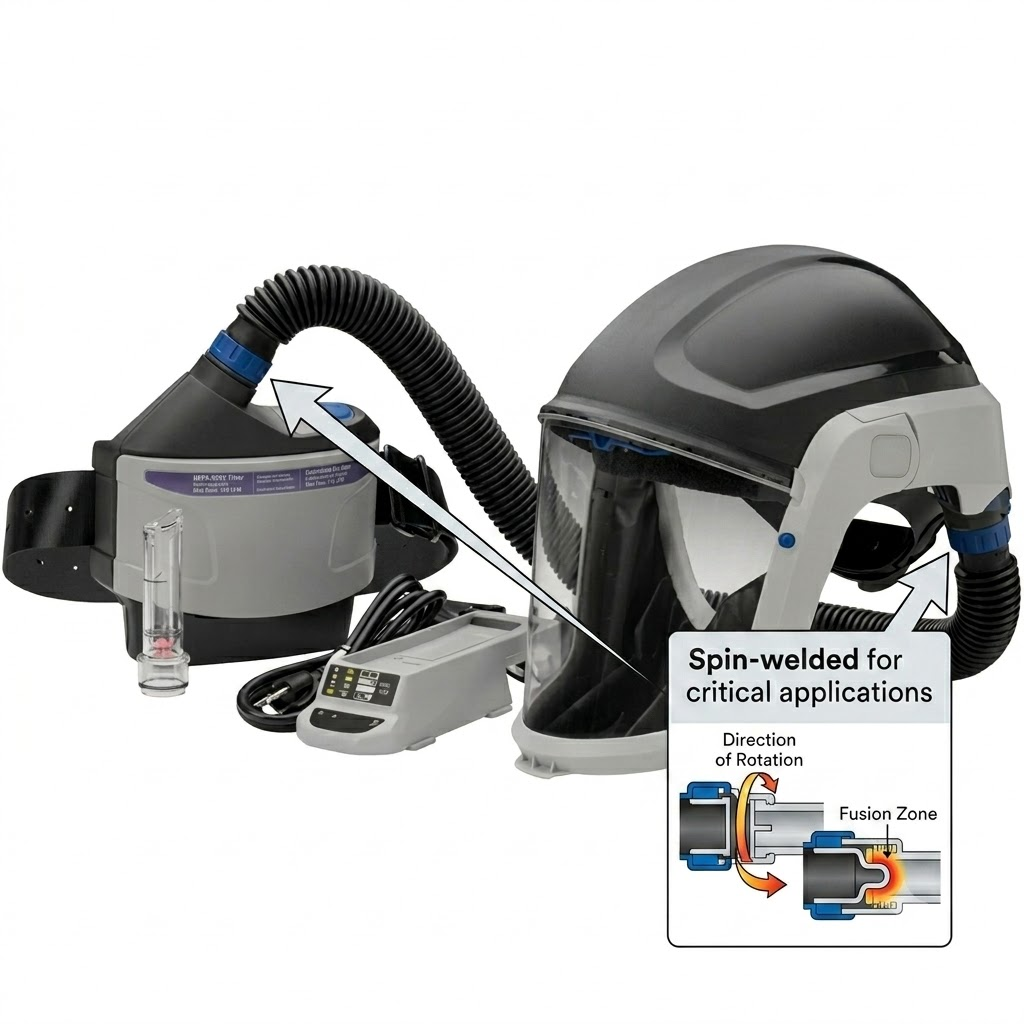
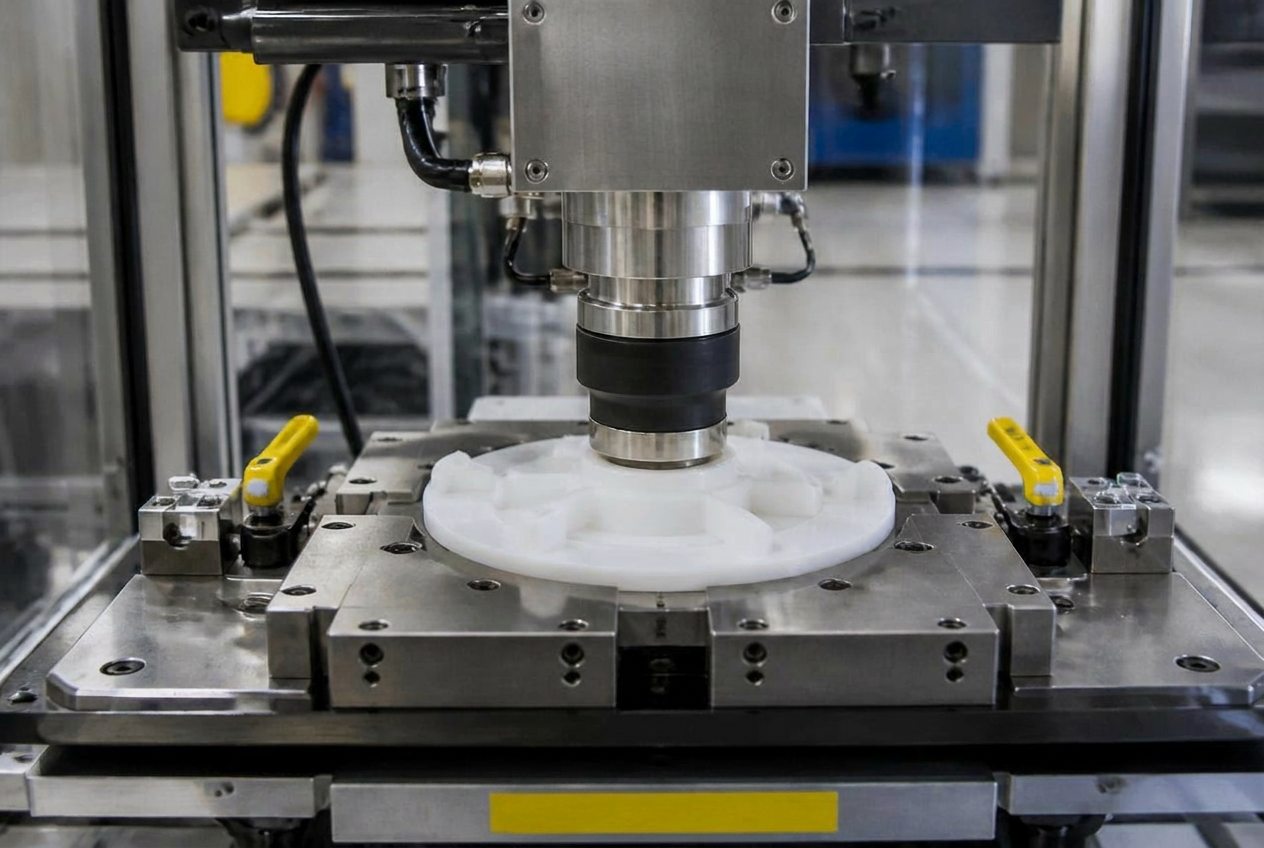
Spin-welding uses controlled rotational friction to join round or rotationally symmetrical plastic parts. The friction melts the mating surfaces, producing exceptionally strong, leak-resistant joints — ideal for filters, reservoirs, float chambers, and sealed circular housings.
Ultrasonic (Sonic) Welding
Ultrasonic welding uses high-frequency vibration to generate localized heat at the joint, fusing small and detailed thermoplastic components quickly and repeatably. It's well suited to precise, high-volume assemblies where speed and clean cosmetics matter.
Not sure which process fits your part? We help you select the right joining method based on geometry, material, strength requirements, and production volume — and we develop the validated process and custom fixturing to support it.
Why Choose Plastic Welding?
- Strong, permanent molecular bonds
- Excellent leak and burst resistance
- No adhesives, solvents, or fasteners
- Clean, repeatable cosmetic appearance
- Fast cycle times for production volumes
- Lower long-term assembly cost
Industries We Serve
Our plastic welding capabilities support manufacturers across a wide range of industries:
- Automotive & transportation
- Medical & laboratory devices
- Filtration & fluid handling
- Industrial & consumer products
- Electronics & sensor housings
- Agricultural & outdoor equipment
Process, Quality & Equipment
Reliable welds come from disciplined process development and control. Every program is engineered, validated, and documented before production, then monitored throughout each run.
- Custom fixture design for accurate part alignment
- Process development and parameter optimization
- First Article Inspection (FAI) and validation builds
- In-process visual and dimensional checks
- Leak and burst testing to customer specifications
- Full traceability and process documentation
Production Experience
Since we began tracking, SSI has spin-welded more than 600,000 parts and ultrasonically welded nearly 400,000 plastic-to-plastic parts. We have also installed over one million brass inserts to support strong, threaded connections in plastic assemblies. These figures are only what we have recorded since we started keeping track; actual production totals are higher.
Frequently Asked Questions
What is plastic welding?
Plastic welding joins two thermoplastic parts using heat and pressure to create a single, permanent assembly — without adhesives, solvents, or fasteners. Common methods include spin-welding and ultrasonic (sonic) welding.
What's the difference between spin-welding and ultrasonic welding?
Spin-welding uses rotational friction and is best for round, leak-tight parts. Ultrasonic welding uses high-frequency vibration and excels on small, detailed, high-volume components. We help you choose the right method for your part.
Which plastics can be welded?
Most compatible thermoplastics — including polypropylene, polyethylene, ABS, polycarbonate, nylon, and acrylic — can be welded. We verify material compatibility during process development.
Is a welded joint as strong as the original plastic?
A properly developed weld often delivers strength, leak resistance, and durability comparable to the surrounding material, making it ideal for sealed and structural assemblies.
Do you support prototypes and low volumes?
Yes. We support prototypes, validation builds, and full production, including custom fixturing developed for each program.
Where is your plastic welding performed?
All welding is performed at our Forest Lake, Minnesota facility, where we have specialized in plastic welding and secondary manufacturing since 1996.
More in Plastic Welding & Beyond
Spin-Welding
Friction-based joining of circular plastic parts producing clean, leak-tight bonds.
Sonic-Welding
High-frequency ultrasonic welding for precise, repeatable assembly of small components.
Assembly
Full mechanical assembly of components and sub-assemblies to your specifications.
Adhesive Applications
Precise bonding and adhesive dispensing for durable, leak-proof, dependable assemblies.